
The Mistake Most Homeowners Make First
The power flickers, the opener goes silent, and the first instinct is to grab the red emergency release cord and yank it — fast, before the groceries melt or before you're late pulling the car out. It's tempting because it looks like a simple on/off switch. It isn't. The release cord disconnects the door from the opener's trolley, which means the door is now held up by nothing but spring tension and your grip. If a spring is weak, rusted from salt air, or already partly fatigued, the door can drop hard and fast the moment that cord is pulled. In a two-car household during hurricane season, that's exactly the kind of outage where this happens — storm knocks out power, someone's in a hurry, and the door comes down before anyone's ready for it.
The fix isn't to avoid the release cord. It's to use it correctly, in the right order, with the door supported.
Before You Touch Anything
Take thirty seconds to look at the door's position and condition:
- Is the door fully down, fully up, or partway? This changes how much spring tension is working against or for you.
- Do you see any visibly stretched, gapped, or rusted coils on the springs above the door? Coastal humidity and salt air speed up corrosion on exposed hardware, so a quick visual check matters more here than it does inland.
- Is anyone standing directly under the door's travel path? Clear that space first.
If the door looks heavily rusted, sags on one side, or a spring is visibly snapped, stop. That's not a manual-release situation — that's a technician call, covered further down.
Tools You'll Need
- A flashlight or headlamp (outages often mean no interior lights either)
- Work gloves
- A step stool if your release cord is out of easy reach
- Locking pliers or a C-clamp, to hold the door in place on the track if you need to leave it partway open
Opening the Door Manually
- Stand to the side of the door, not directly underneath it.
- Locate the emergency release cord — the red handle hanging from the trolley on the track, usually a few feet from the top of the door.
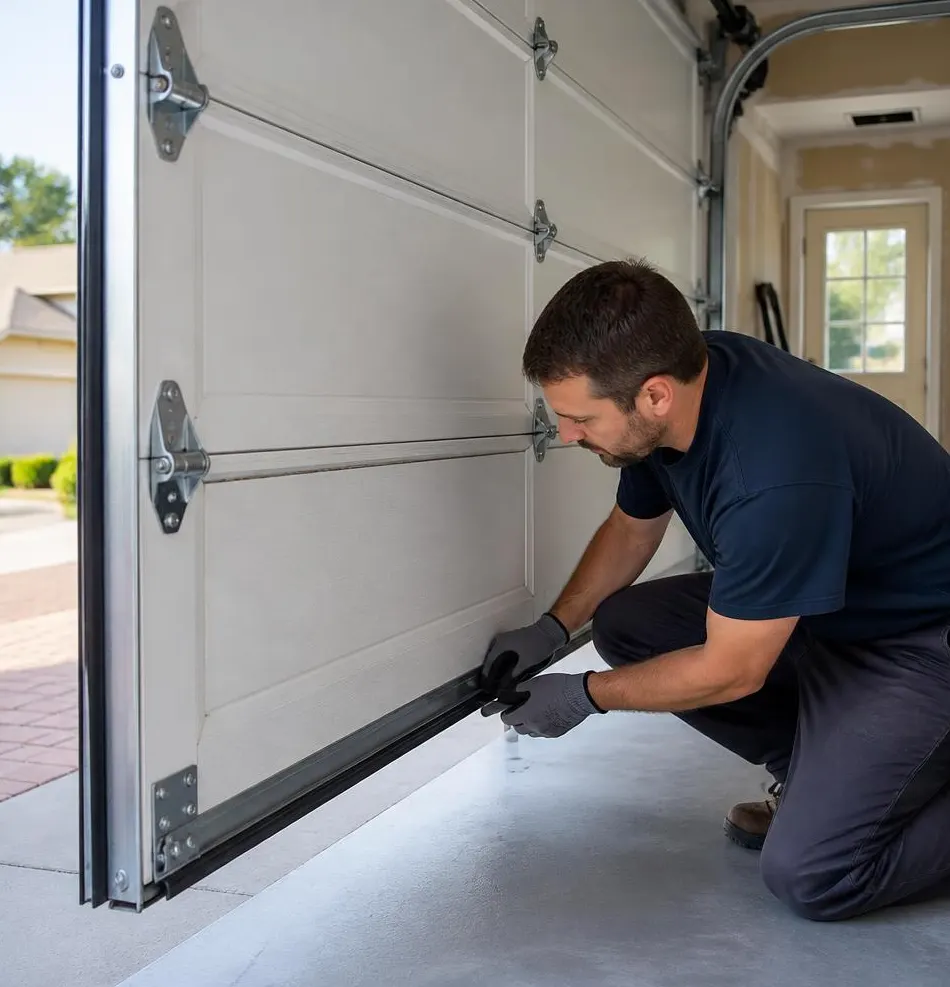
- With one hand, support the door's bottom panel or have a second person hold it steady. This is the step most people skip.
- Pull the release cord straight down and toward the back of the opener to disengage the trolley. You'll hear or feel a click.
- Slowly lift the door by hand, guiding it along the track. If it feels unusually heavy or jerks instead of gliding, stop — that resistance usually means a spring or roller problem, not a power problem.
- Once open, prop it or clamp the locking pliers onto the track just below a roller so the door can't slide back down while you're in and out.
Closing and Securing the Door
- Lower the door by hand along the track, keeping your fingers clear of the panel joints.
- Push it fully down until it seats against the floor.
- If a storm is active or expected, this is also the moment to confirm the door is latched or locked manually — an unsecured door during high wind isn't just inconvenient, it's a wind-load risk, since garage doors are one of the weak points builders design around for storm pressure.
After Power Returns: Re-Engaging the Opener
- Reconnect the trolley by pulling the release cord toward the door (the opposite direction from disengaging) or by manually moving the door until the trolley clicks back into the track carrier — check your opener's manual, since the reconnect motion varies by brand.
- Use the wall button or remote to run the door through one full open-close cycle, watching that it travels smoothly without grinding or hesitating.
- Check that the safety sensors (the two small eyes near the floor on each side of the track) are aligned and their indicator lights are steady, not blinking — power surges from an outage can sometimes jostle these out of alignment.
- If you have a battery backup unit, confirm it's charging again once power is restored.
What's Homeowner Territory, What Needs a Technician
Manually opening and closing the door, and reconnecting the trolley afterward, is normal homeowner work — no special skill required, just care and the right order of steps. Where it crosses into technician territory:
- The door won't budge even with the opener disengaged — likely a spring, cable, or track issue, not a power issue.
- The door drops unevenly or faster on one side when released.
- Sensors stay misaligned or the opener won't reconnect correctly after several tries.
- You notice rust, fraying cable strands, or a bent track while doing your check — common after a season of salt air and storm humidity, and not something to force through manually.
When to Call North Miami Beach Garage Door Pro
If your manual release reveals a heavy, uneven, or grinding door, or the opener won't reconnect cleanly after an outage, that's our territory. We handle Garage Door Spring Repair for the coils that take the brunt of coastal humidity, and Garage Door Cable & Roller Repair for tracks that have started to bind or rust. Same-day service means you're not stuck manually operating a heavy door through the next storm while you wait.
If the next outage leaves your door stuck, grinding, or just not behaving right afterward, call North Miami Beach Garage Door Pro for fast, honest help anywhere from 163rd Street to Ives Estates.